Peace in the Qur’an: From a Slogan to a Divine Methodology for Saving Humanity
Democratic
Center for Middle East Studies
North Carolina – United States
Analytical Study
A Critical Analytical Reading of the Discourse of Ali Mohammed Al-Sharafaa Al-Hammadi
Prepared by:
Dr. Moataz Salah El-Din
Advisor, Democratic Center for Middle East Studies – North Carolina
Executive Summary
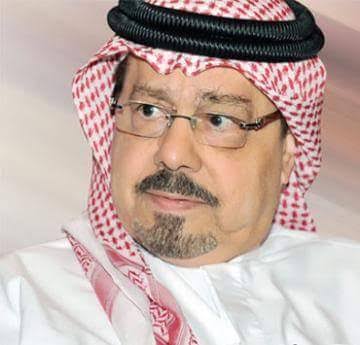
This analytical study examines the discourse of the Arab thinker Ali Mohammed Al-Sharafaa Al-Hammadi, which was delivered on his behalf during a seminar organized by the Resalat Al-Salam Foundation in Cairo during the holy month of Ramadan.
The discourse presents a comprehensive Qur’anic vision of peace as a complete divine methodology for organizing human and societal life, rather than merely a moral slogan or an emotional narrative.
The study aims to analyze the intellectual structure of the discourse and explore the Qur’anic foundations upon which its concept of peace is built, while also evaluating its propositions in light of the intellectual, political, and civilizational challenges facing the Muslim world in the modern era.
The study concludes that the discourse represents an important reformist intellectual contribution to the contemporary debate on the relationship between Qur’anic texts and issues of peace, justice, and social stability.
First: The Intellectual and Political Context of the Discourse
The discourse was delivered within a symbolically significant context, as it took place during the month of Ramadan—the month in which the Qur’an was revealed. This reinforces the organic relationship between divine revelation and the concept of human peace.
The seminar was held under the auspices of the Resalat Al-Salam Foundation in an international environment characterized by escalating armed conflicts and worsening geopolitical crises, alongside the accumulated intellectual and identity crises within the Muslim world.
The discourse can be situated within a reformist intellectual current that calls for rereading the religious heritage in light of the Qur’an as the supreme reference in Islam, while advocating the transcendence of human interpretations that historically contributed to divisions and conflicts within Muslim societies.
Second: The Concept of Peace in the Qur’anic Vision
2.1 Peace as a Comprehensive Value System
The discourse establishes its vision of peace based on the Qur’anic verse:
“O you who believe, enter into peace completely.”
(Qur’an 2:208)
Within the discourse, peace is presented as an integrated system of values encompassing all dimensions of human existence—from the relationship between human beings and God, to their relationship with themselves, and ultimately to their social, political, and economic relationships.
This Qur’anic conception gives the discourse a philosophical and ethical dimension that goes beyond the conventional understanding of peace as merely the absence of war.
The discourse further emphasizes that true peace begins within the human soul, drawing on the Qur’anic verses:
“He has succeeded who purifies it,
And he has failed who corrupts it.”
(Qur’an 91:9–10)
This reflects a profound understanding of the relationship between inner peace and social peace.
2.2 The Three Qur’anic Foundations of Peace
The discourse identifies three primary Qur’anic pillars upon which genuine peace in human societies is built:
Justice
Based on the Qur’anic verse:
“Indeed, Allah commands justice and excellence.”
(Qur’an 16:90)
Responsible Freedom
Derived from the Qur’anic principle:
“There shall be no compulsion in religion.”
(Qur’an 2:256)
Fulfillment of Covenants and Agreements
Based on the Qur’anic command:
“O you who believe, fulfill your contracts.”
(Qur’an 5:1)
This triad of values forms the ethical and legal foundation for building stable societies capable of achieving development and prosperity.
Third: A Critical Diagnosis of the Crisis of Peace in the Muslim World
3.1 Deviation from the Qur’anic Reference
The discourse offers a critical diagnosis of the roots of the civilizational crisis in the Muslim world. It argues that one of the principal causes of the absence of peace lies in the departure from the Qur’anic reference and its replacement with human narrations and interpretations that have historically generated prolonged intellectual and sectarian conflicts.
This argument is supported by the Qur’anic verse:
“Follow what has been revealed to you from your Lord and do not follow other protectors besides Him.”
(Qur’an 7:3)
3.2 The Crisis of Religious Identity
The discourse highlights the phenomenon of sectarian and doctrinal pluralism within Muslim societies, where multiple groups claim the banner of Islam while simultaneously engaging in internal conflicts.
According to the discourse, this phenomenon reflects a deep crisis in the understanding of religious authority, as historical and political disputes have gradually transformed into religious conflicts, ultimately fragmenting the collective identity of the Muslim ummah.
3.3 The Problem of Formal Religiosity
The discourse raises a critical question regarding the relationship between outward religiosity and genuine adherence to the Qur’anic methodology.
It asks: how can societies expect divine relief and victory while failing to adhere to God’s principles of justice, compassion, and benevolence?
This question represents a direct call for intellectual and ethical reassessment of prevailing forms of religiosity.
Fourth: The Developmental and Social Impact of Peace
The discourse emphasizes the close relationship between peace and development, asserting that societies characterized by peace direct their resources toward building educational, health, and productive institutions rather than exhausting them in armed conflicts.
The discourse also stresses the role of the family as the primary unit for building social peace, arguing that families founded on mutual respect and ethical values provide the fundamental environment for raising generations capable of coexistence and stability.
Fifth: Qur’anic Peace as a Global Civilizational Project
The discourse advances toward a comprehensive civilizational vision by presenting Qur’anic peace as a universal humanitarian project aimed at saving humanity from cycles of violence and conflict.
This vision draws on the Qur’anic verse:
“Say: O Allah, Owner of Sovereignty, You give sovereignty to whom You will and take sovereignty away from whom You will.”
(Qur’an 3:26)
This reinforces the idea that power and authority are not ends in themselves, but rather moral responsibilities and human tests.
Sixth: Scientific Evaluation of the Discourse
1. Strengths
The discourse demonstrates several important methodological strengths:
Direct reliance on the Qur’anic text as the primary analytical reference.
Logical coherence in the structure of the discourse.
Integration of spiritual and social analysis in discussing peace.
A bold critical approach toward issues in Islamic history.
2. Issues Requiring Further Research
Despite the intellectual importance of the discourse, several issues require further academic exploration, including:
The relationship between returning to the Qur’anic reference and the multiplicity of interpretations of the text.
Mechanisms for applying this reformist approach within contemporary political and social contexts.
The discourse of Ali Mohammed Al-Sharafaa Al-Hammadi can be considered an important intellectual contribution to contemporary debates concerning peace and religious reform in the Muslim world.
This study recommends expanding academic research within this intellectual direction, which seeks to restore the Qur’an as a civilizational reference capable of contributing to the construction of a more just and peaceful world.
In a world witnessing an unprecedented escalation of conflicts, the message of Qur’anic peace remains a human horizon for rebuilding the global value system on the foundations of justice, mercy, and human dignity.
“And your Lord is never unjust to His servants.”
(Qur’an 41:46)
Dr. Moataz Salah El-Din
Advisor, Democratic Center for Middle East Studies – North Carolina