Analytical Study of the Discourse of the Thinker Ali Mohammed Al-Sharafaa Addressed to the Egyptian Minister of Foreign Affairs
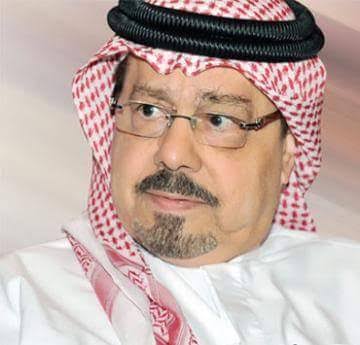
Prepared by:
Dr. Moataz Salah El-Din
Advisor, Democratic Center for Middle East Studies
Introduction
The message addressed by the Arab thinker Ali Mohammed Al-Sharafaa Al-Hammadi to the Egyptian Minister of Foreign Affairs Badr Abdelatty represents an intellectual and political document reflecting an integrated strategic vision concerning the future of Arab national security and the mechanisms for achieving it amid the profound transformations currently reshaping the regional order in the Middle East.
This discourse came in the aftermath of the extraordinary meeting of the Council of the League of Arab States at the ministerial level, which addressed the rapidly evolving developments in the Arab region and the increasing political and security threats surrounding it. The thinker was particularly attentive to the Egyptian foreign minister’s call for the formation of a joint Arab force capable of addressing the current and future challenges facing Arab states.
In response, Ali Mohammed Al-Sharafaa revisited a proposal he had previously submitted several years earlier to the former Secretary-General of the Arab League. The proposal calls for the establishment of an Arab National Security Council as an institutional framework for strategic planning and military coordination among Arab states, with the aim of strengthening collective defense capabilities and protecting the higher interests of the Arab world.
First: The Political and Regional Context of the Discourse
The significance of this discourse cannot be understood outside the broader regional political context experienced by the Arab region in recent years. The region has witnessed a series of crises, armed conflicts, and political tensions, along with increasing external interventions in Arab affairs.
Several factors have contributed to the renewed discussion of collective Arab national security, including:
The rise of regional security threats facing several Arab states due to armed conflicts and border tensions.
Increasing international and regional intervention in the internal affairs of Arab countries.
A decline in the level of coordinated Arab action on several strategic issues.
The urgent need for a collective defense system capable of addressing contemporary security challenges.
In light of these developments, Ali Mohammed Al-Sharafaa proposes a vision that calls for moving beyond traditional political rhetoric toward structured institutional action in the field of Arab national security.
Second: The Strategic Dimension of the Arab National Security Council Proposal
The project proposed by Al-Sharafaa is based on the establishment of an Arab National Security Council as a supreme strategic body responsible for joint military and security planning among Arab states.
This proposed council would pursue several key strategic objectives:
1. Activating the Joint Arab Defense Treaty
The discourse notes that Arab states signed the Joint Arab Defense Treaty decades ago; however, the treaty has not been effectively implemented in practice.
According to Al-Sharafaa, the creation of an Arab National Security Council could provide the executive framework necessary to transform the treaty into an effective operational system.
2. Achieving Arab Military Integration
The proposal suggests practical mechanisms to promote military integration among Arab states, including:
Enhancing cooperation between Arab armed forces.
Exchanging military and technical expertise.
Developing communication and coordination systems among military leaderships.
This approach aims to build a collective Arab defense capability capable of addressing shared security challenges.
3. Developing Joint Strategic Planning
The proposed council would also be responsible for preparing strategic plans to address potential crises and threats, whether direct military threats or non-traditional security challenges.
This would include preparing scenarios to respond to aggression against any Arab state and intervening diplomatically or strategically to contain disputes between Arab states before they escalate into armed conflicts.
Third: Proposed Operational Mechanisms
Al-Sharafaa’s discourse presents a practical framework for the operational mechanisms of the proposed Arab National Security Council.
These mechanisms include:
1. Military Coordination Among Arab States
The project proposes establishing a permanent communication and coordination network among Arab military leaderships to facilitate information exchange, expertise sharing, and coordinated responses to security challenges.
2. Joint Military Exercises
The proposal also includes the organization of regular joint military exercises among Arab armed forces in order to:
Enhance the readiness of Arab military forces.
Improve operational coordination between armies.
Increase mutual understanding of different military systems and capabilities.
3. Joint Military Training Programs
The project emphasizes the importance of joint training programs for officers, non-commissioned officers, and soldiers through military academies and exchange programs among Arab states.
Such initiatives would significantly contribute to improving the professional competence of Arab armed forces.
Fourth: Institutional and Organizational Structure of the Proposal
The proposed Arab National Security Council is not limited to military cooperation but includes the development of a comprehensive institutional framework to ensure continuity and effectiveness.
Key elements of this structure include:
1. General Secretariat of the Council
The proposal suggests establishing a permanent general secretariat for the Arab National Security Council headquartered at the League of Arab States. The secretariat would be responsible for administrative coordination and preparing periodic reports on the council’s activities.
2. Rotational Leadership System
The discourse proposes adopting an alphabetical rotational system among Arab states for appointing the Secretary-General of the council.
Under this system, each Arab state would have the opportunity to nominate one of its senior officials to serve for a limited term not exceeding three years.
The objective is to ensure fairness in the distribution of responsibilities and strengthen the spirit of partnership among Arab states.
3. Relationship with the Arab Defense Council
The proposed Arab National Security Council would be responsible for preparing strategic recommendations and plans, which would then be submitted to the Arab Defense Council for approval and implementation according to a defined timeline.
Fifth: Intellectual and Political Reading of the Discourse
The discourse of Ali Mohammed Al-Sharafaa reflects several important intellectual and political dimensions.
1. Reviving the Idea of Arab Solidarity
The discourse emphasizes the need to revive the concept of Arab solidarity, but within a practical institutional framework that goes beyond traditional political rhetoric.
2. Critique of Arab Fragmentation
The discourse presents a clear critique of the divisions affecting Arab states, which have weakened their ability to confront shared challenges.
Al-Sharafaa argues that rhetorical conflicts and slogans unsupported by practical policies have led to the loss of historic opportunities for strengthening Arab integration.
3. Warning of Strategic Risks
The discourse warns against the continuation of Arab weakness in a world increasingly shaped by powerful regional blocs, which may reduce the Arab world’s ability to protect its strategic interests.
Sixth: Strategic Implications of the Discourse
The discourse carries several important strategic implications:
A call for building a collective Arab national security system.
Emphasis on the necessity of military and strategic integration among Arab states.
Highlighting the need for effective Arab institutions capable of making and implementing strategic decisions.
Calling for a shift from political slogans to institutional action.
Concluding Remarks
The discourse of Ali Mohammed Al-Sharafaa Al-Hammadi can be viewed as a strategic intellectual initiative aimed at reintroducing the issue of Arab national security within a practical institutional framework.
Rather than merely diagnosing the political causes of Arab weakness, the proposal offers a comprehensive vision for establishing a collective Arab defense system based on strategic planning, military coordination, and institutional cooperation.
Although the implementation of such a project would face multiple political and economic challenges, the importance of this proposal lies in its contribution to reopening the debate on the necessity of building an Arab collective security system capable of safeguarding the interests and sovereignty of Arab nations in an increasingly complex international environnement.